The Parent's Ultimate Guide to Educational & Developmental Toys in Australia
An evidence-based guide to screen-free learning, STEM principles, sensory integration, and developmental milestones from toddlerhood to early primary school.
Choosing toys for your children is one of the most impactful everyday decisions a parent makes. Far beyond mere entertainment, the objects children manipulate with their hands shape how their brains build neural pathways for problem-solving, spatial reasoning, and emotional regulation. In an era dominated by flashing screens and digital noise, Australian families are increasingly returning to purposeful, open-ended play.
This comprehensive guide explores the science of purposeful play, details the four core developmental pillars, provides an age-by-age milestone roadmap, and highlights the best high-impact tools available across Australia.
What You Will Learn in This Guide:
- The 4 Developmental Pillars: STEM & Physics, Social-Emotional Learning (SEL), Sensory Regulation, and Fine Motor Foundations.
- Open-Ended vs. Closed Toys: Why toys with no fixed outcome offer 10x the replay and cognitive value.
- Age-by-Age Milestone Matrix: Selecting the exact right toy category from newborn to 5+ years.
- Australian Safety & Quality Standards: What AS/NZS ISO 8124 compliance means for non-toxic, safe play.
1. What Makes a Toy Truly "Educational"?
The label "educational" is frequently stamped onto electronic plastic toys with pre-programmed buttons, flashing lights, and repetitive voice recordings. However, developmental psychologists and early childhood educators agree that passive entertainment rarely builds critical cognitive faculties. A truly high-impact educational toy possesses four key characteristics:
- Open-Ended Versatility (90% Child, 10% Toy): The child drives the action. A set of magnetic tiles or wooden blocks can be a castle today, a rocket ship tomorrow, and a math counting tool next week.
- Tactile Sensory Feedback: Physical resistance, natural textures, and real-world weight give the brain immediate proprioceptive feedback that touchscreens cannot replicate.
- Self-Correction Mechanics: Toys like Montessori sorting boards or gravity-driven ball runs let children see when a piece doesn't balance or fit, teaching resilience and logical deduction without adult intervention.
- Long-Term Durability: Quality materials that endure years of active play and comply with strict Australian safety standards (AS/NZS ISO 8124).
2. The Four Pillars of Early Childhood Play
To give your child a balanced play diet, look for toys that address these four core learning dimensions:
Pillar A: STEM, Physics & 3D Spatial Reasoning
Before children ever open a maths textbook, they understand gravity, friction, and geometry by stacking, balancing, and building. Open-ended construction sets challenge spatial reasoning by requiring children to translate 2D flat geometric shapes into 3D upright structures. Read our complete deep dive on how magnetic tiles and ball runs teach early physics to preschoolers.
Pillar B: Pretend Play & Social-Emotional Learning (SEL)
Role-play is how children make sense of the adult world. Acting out stories builds vocabulary, fosters cognitive empathy (understanding another person's feelings), and teaches emotional self-regulation. Read our in-depth breakdown on why pretend play is vital for language and emotional growth.
Pillar C: Sensory Processing & Neurodivergent Focus (ASD / ADHD)
Children with sensory modulation differences or high energy benefit from toys providing tactile and proprioceptive input. Fidgets, weighted sensory items, and visual feelings boards calm an overstimulated nervous system and channel restless physical energy into productive concentration. Read our full guide on sensory play tools for autism, ADHD, and focus.
Pillar D: Fine Motor Control & Montessori Foundations
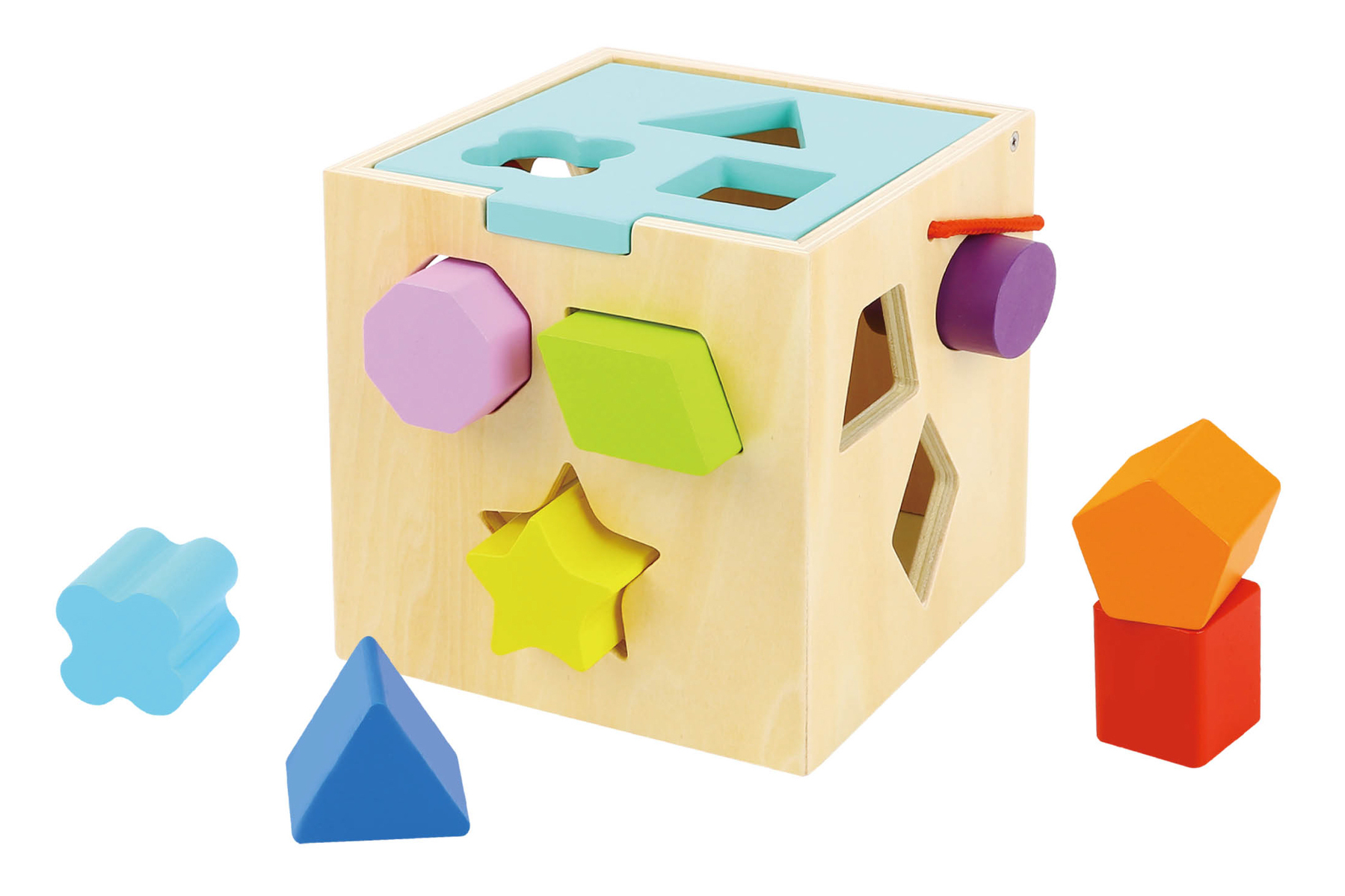
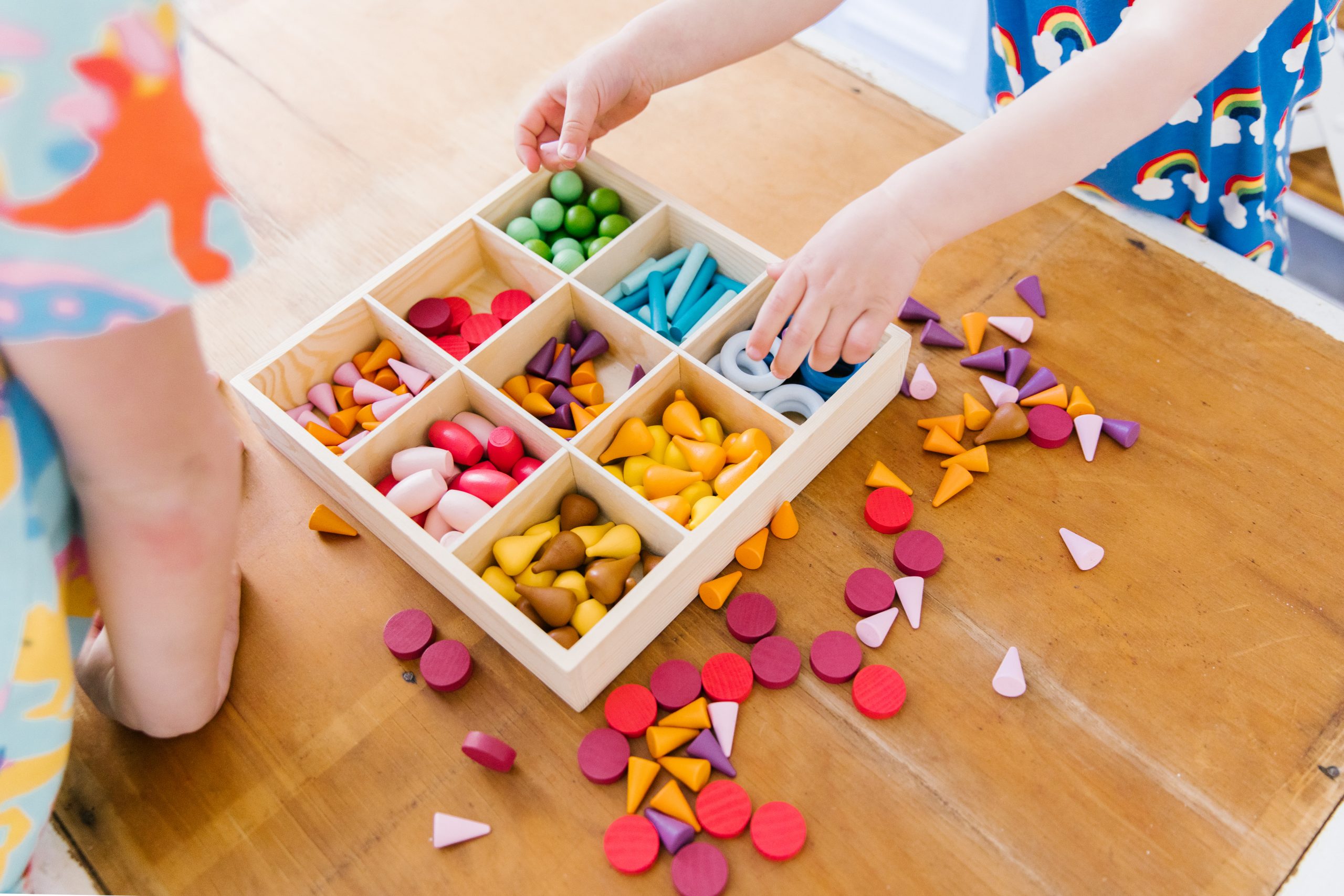
Pincer grasp, wrist stability, and bilateral hand coordination developed through sorting, stacking, and latch manipulation are the physical prerequisites for holding a pencil, using scissors, and dressing independently. Read our milestone guide on fine motor milestones and Montessori toddler toys.
Featured Educational Toys for Purposeful Play
Explore trusted, child-safe developmental toys shipped Australia-wide from Nice Tribe:



3. Age-by-Age Developmental Toy Matrix
Every child develops at their own pace, but matching toys to developmental milestones prevents boredom and frustration:
| Age Group | Primary Milestones | Recommended Toy Types |
|---|---|---|
| Newborn to 12 Months | Grasp reflex, high-contrast visual tracking, tactile awareness | Soft rattles, silicone teethers, tactile sensory balls, mirror boards. |
| 12 – 24 Months | Pincer grasp, hand-eye coordination, object permanence | Wooden sorting boards, stacking cups, soft silicone sensory blocks, push-along walkers. |
| 2 – 3 Years | Early spatial awareness, symbolic play, language explosion | Large magnetic tiles, simple pretend play food sets, chunky puzzles, sensory activity cubes. |
| 3 – 4 Years | Fine motor dexterity, imaginative storylines, sorting by attribute | Magnetic tile sets, pretend play kitchens, feelings puzzles, balance boards. |
| 4 – 5 Years | 3D engineering, cooperative play, emotional vocabulary | Magnetic ball runs, emotion regulation tools, dramatic role-play costumes, balance mazes. |
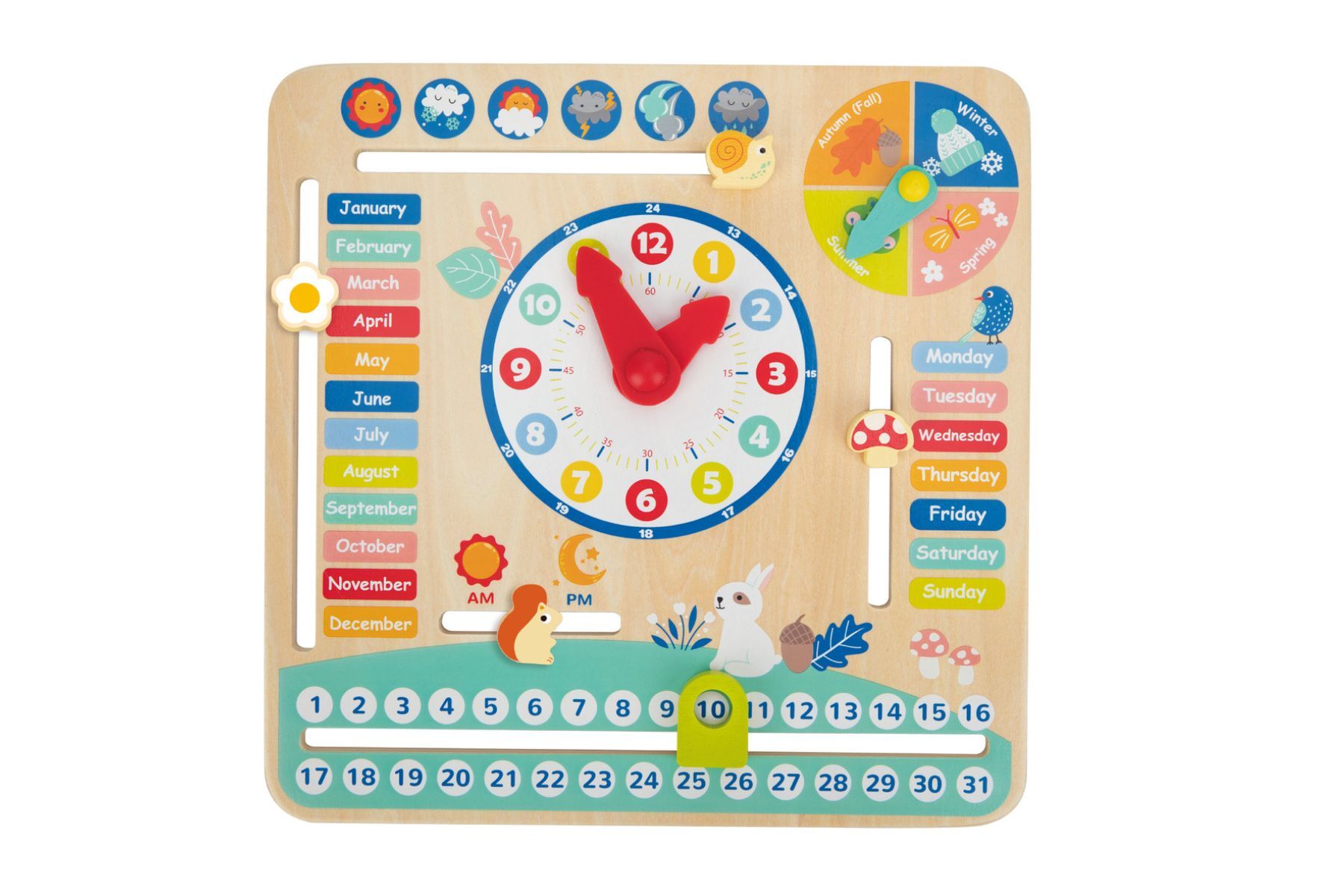
| 5 Years + | Logical deduction, numeracy, time-telling, complex physics | Analogue teaching clocks, advanced STEM construction packs, cooperative strategy games. |
4. Three Principles for an Effective Home Play Space
- Implement Intentional Toy Rotation: Too many options leads to sensory overwhelm and shallow engagement. Keep 6 to 8 quality toys visible on low, accessible shelves and rotate every few weeks to renew curiosity.
- Cross-Pollinate Play Categories: Encourage children to combine categories—such as using magnetic tiles to build a garage for pretend play cars, or using emotion tiles alongside storytelling dolls.
- Prioritise Process Over Product: In open-ended play, there is no "wrong" way to build. Avoid correcting your child's structure if it doesn't match an instruction manual—the learning happens during the trial, collapse, and rebuild.
Explore Our Developmental Guides & Ranges
Deepen your child's learning journey with our Australian evidence-based guides and shop ranges:
- Montessori Guide: Fine Motor Milestones for Toddlers – Pincer grasp & wooden sorting.
- Sensory Guide: Choosing the Right Tools for Autism & ADHD – Tactile grounding & focus.
- STEM Guide: How Magnetic Tiles & Ball Runs Teach Early Physics – Gravity & spatial reasoning.
- SEL Guide: Why Pretend Play Is Vital for Language & Emotional Growth – Communication & empathy.
- Magnetic Tiles & STEM Sets – 3D construction and gravity ball runs.
- Pretend Play & Role Play Sets – Dress-up and imaginative storytelling props.
- Montessori Wooden Toys – Non-toxic wooden sorting, stacking, and activity cubes.
- Sorting & Stacking Collection – Tactile fine motor learning boards.
Frequently Asked Questions (Click to Expand)
What are the best educational toys for toddlers in Australia?
The best toddler toys focus on fine motor skills and open-ended manipulation. Top choices include wooden sorting boards, silicone stacking toys, magnetic tiles, and tactile activity cubes compliant with AS/NZS ISO 8124 safety standards.
How do open-ended toys differ from electronic battery toys?
Electronic toys direct the child's attention passively with predetermined sounds and lights. Open-ended toys require the child to supply the imagination, problem-solving, and movement, resulting in significantly higher cognitive development.
Are magnetic tiles compatible across different brands?
Yes, high-quality standard magnetic tiles use compatible sizing and rivet safety configurations, allowing families to combine packs seamlessly for larger open-ended builds.
How can educational toys support children with ASD or ADHD?
Sensory toys, weighted elements, and visual emotion puzzles provide targeted tactile and proprioceptive input. This sensory grounding calms nervous system arousal, channels restless energy, and improves focus during structured learning.
What makes a toy compliant with Australian safety standards?
In Australia, toys must comply with AS/NZS ISO 8124, which tests for non-toxic finishes (lead and heavy metals), mechanical safety (secure magnet encapsulation and choke hazard prevention), and flammability resistance.
How often should parents rotate educational toys at home?
Rotating a small collection of 6 to 8 toys every 2 to 4 weeks is optimal. This prevents visual clutter and overstimulation while reigniting children's curiosity and deeper engagement with forgotten toys.
At what age should children start learning with analogue clocks?
Children can begin exploring analogue teaching clocks around age 4 to understand the concept of time and daily routines (e.g., bedtime, snack time). By age 5 to 7, they can grasp 5-minute increments and hours.
Why are wooden toys considered superior for fine motor development?
Wooden toys have natural weight, texture, and density that require precise finger grip and muscle modulation. This tactile resistance builds the pincer strength needed for future handwriting far better than lightweight hollow plastics.